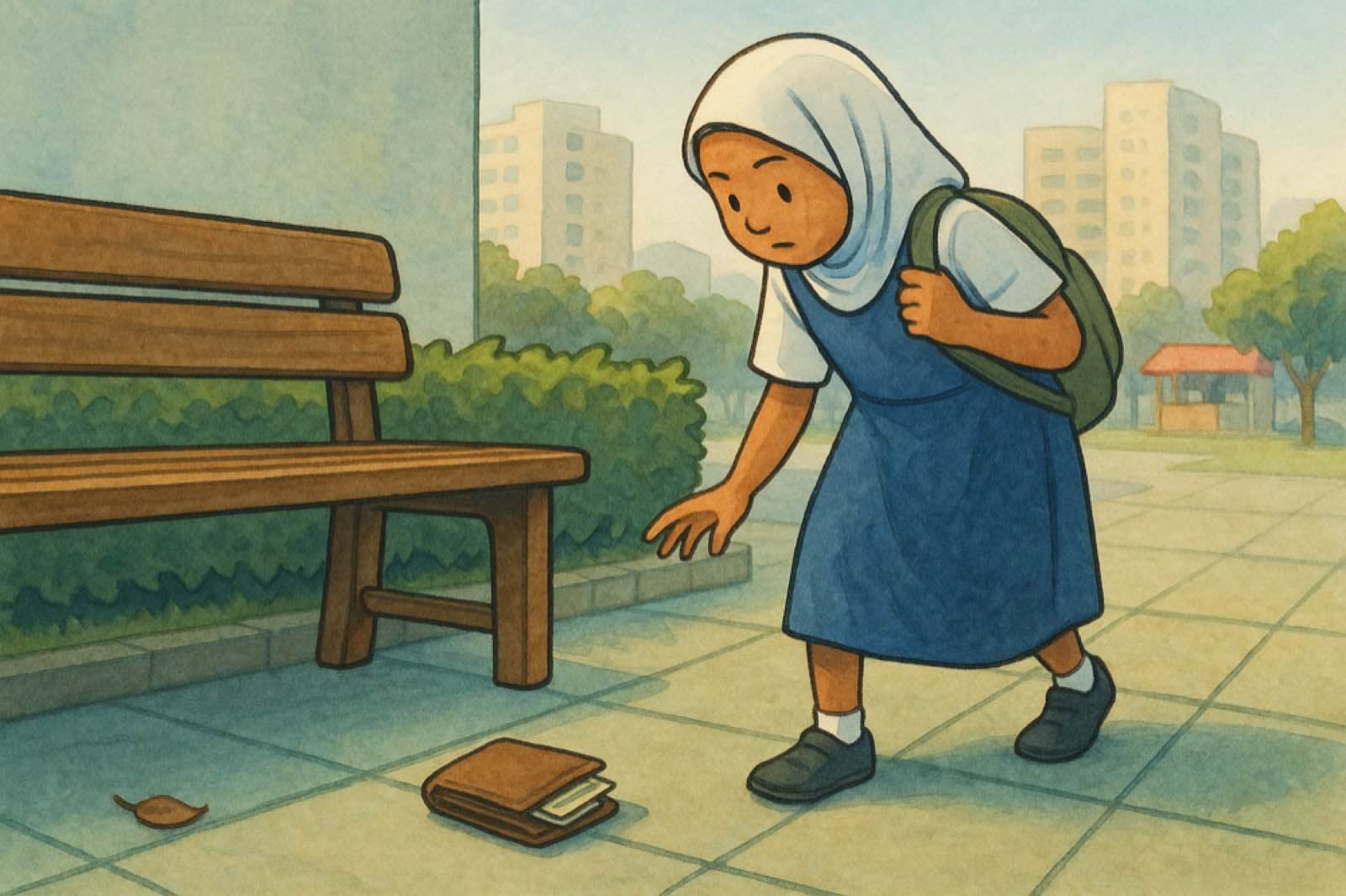
Suhaimi was the daughter of a poor woman. Her father had passed away two months ago, and they were left with very little to live on. Although they were poor, they were grateful to have each other. Every morning, Suhaimi ate a piece of bread for breakfast before going to school, while her mother pushed her cart to sell hot-dogs. Not many people bought them, but she did not give up. In school, Suhaimi studied hard and listened during class, even when some classmates talked noisily and doodled on paper.
One bright afternoon, something tested her honesty. As Suhaimi walked home, she spotted something brown and bulging under a bench. She picked it up. It was a wallet. Her heart was racing as she opened it. Inside were neat stacks of notes. She counted slowly. There was $555. She thought about her mother’s tired hands and the quiet table at dinner. She glanced around. No one was looking. However, this wallet was not hers, and stealing was wrong. She searched the wallet and found an identity card. She decided to return it.
When she reached the address, she wiped her sweaty palms and knocked. The door opened to a man with worried eyes. It was Mr Woods, the owner. When he saw the wallet, he broke into a wide smile. “Thank you so much,” he said, his voice full of relief. He invited Suhaimi to lunch and asked about her family. Mr Woods offered her some money, but Suhaimi politely shook her head.
A few days later, Suhaimi and her mother received many parcels. However, her mother had not ordered any. Each one had a note that read, “From a very grateful Mr Woods.” The boxes were filled with food and household items. Suhaimi thanked him for being very kind and generous. His mother was proud because her daughter had been honest. They became friends with Mr Woods and visited him regularly. Being honest did not make them rich, but it brought them kindness and peace.
Read more compositions like this one in Playwrite.
Every piece in the library comes with a teacher's note and phrases that stood out.