PSLE grammar, comprehension and listening practice.
An overview of the other components your child can practise.
Grammar
Every wrong answer opens Explain to Me: why the right answer fits, why the wrong one seemed right, and a similar question to try. Your child learns why an answer is wrong, so the same mistake stops coming back.
PlaywriteGrammar · Question 4 of 10“The basket of apples not for sale,” the cashier said, pointing to the display.
- Ais
- Bare
- CwasYour answer
- Dwere
Explain to MeLook: The word “basket” names one thing, so it needs a one-thing verb.
Why not “was”: “Was” may seem right because the cashier spoke in the past, but she is talking about the basket now.
Try this:The box of crayons ___ on the table now.
wasisVocabulary
After each question, the meaning of every option is shown, right or wrong. The wrong options teach as much as the right one, so every question builds more than one word.
PlaywriteVocabulary · Question 2 of 10The abandoned house stood forlornly on the hill, its windows like empty eyes staring out at the world.
- Acalmly
- Bforlornly
- Cperfectly
- Dcheerfully
Well done- Calmly: in a peaceful and quiet way, without any worry or excitement
- Forlornly: in a sad and lonely way, as if feeling abandoned or hopeless
- Perfectly: in a way that is without any mistakes or flaws
- Cheerfully: in a happy and bright way, full of joy and positivity
Cloze
Grammar, vocabulary and comprehension cloze, with a Why? on every wrong blank. It shows why the right word fits and why your child's did not, so they learn to read the words around each blank.
PlaywriteComprehension Cloze · ReportOne day, Kevin was up to his usual antics. He (3) wentcrept up to Mrs Ang’s desk and placed a life-like rubber cockroach on it.
Explain to MeWhy not “went”: Went fits because Kevin moved to the desk, but it does not show that he moved quietly so Mrs Ang would not notice.
Why “crept”: Crept is a verb that tells us how Kevin moved, quietly and carefully.
Editing
Spelling and grammar errors to find and fix, each correction marked with its reason. It trains the same eye your child needs to check their own compositions.
PlaywriteEditing · ReportIt can perform tasks previously only posibelpossible by a human, such as speech reconisionrecognisionrecognition and decision-making.
Why? The word ‘reconision’ is misspelled. The correct spelling is ‘recognition’.Synthesis and Transformation
The accepted answer sits beside your child's, and every wrong one opens Explain to Me. Your child learns the rule behind the rewrite, so it carries over to new sentences.
PlaywriteSynthesis and TransformationDenise does not sing well. John does not sing well too.
Neither nor .
- Your answer
- Neither Denise nor John does sing well
- Accepted answer
- Neither Denise nor John sings well.
Explain to MeWhy not: Using “does sing” may feel right because the first two statements say “does not sing”. But neither and nor already make the sentence negative, so “does” is not needed.
Try this:Ali does not run fast. Mei does not run fast. Neither Ali nor Mei ___.
Comprehension
Open-ended answers are marked question by question, with the reason for each score and a suggested answer, and visual text questions are marked as they are answered. Your child sees exactly where the marks were lost, and what a full answer needs.
PlaywriteComprehension · Report12. Was John really Fred’s ‘best friend’? Explain with evidence from the passage.
1 / 2Your answer: No as he talked bad about him behind his back and said that if he was fred he would probably wouldn’t come to school at all.
You correctly showed that John spoke badly about Fred, but you did not include that John was only friends with Fred because the Principal had assigned them to the same classes.Suggested answer: No, John was not really Fred’s best friend. John mocked Fred by calling him a monster, and he admitted that he only befriended Fred because the Principal had assigned them to the same classes.
Listening Comprehension
Picture, text and route questions, note-taking and sequencing, marked the moment they are submitted. The report plays the recording again beside its transcript, so your child can find exactly what they missed.
PlaywriteListen0:34 / 1:30You will hear a story about a girl at a neighbourhood festival. You may play it twice.
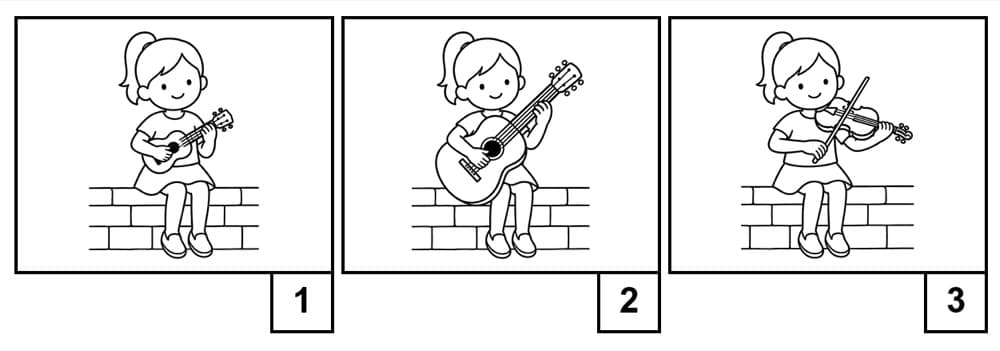
1. Which picture shows the instrument Priya played?
- 1Picture 1
- 2Picture 2
- 3Picture 3
The key word is ‘ukulele’, the small four-stringed instrument from her aunt. Arun’s guitar is the trap: she wanted to borrow it but it was too large.Curious Reads
A weekly article about the world, with a few questions and a short writing task that comes back with feedback. It keeps your child reading and writing beyond the syllabus.
PlaywriteCurious Reads · This week Tilly’s Geography Lesson
On the morning after Christmas in 2004, Mai Khao Beach in Thailand was calm and beautiful. The sand was warm and golden, and the blue sea lapped gently at the shore.
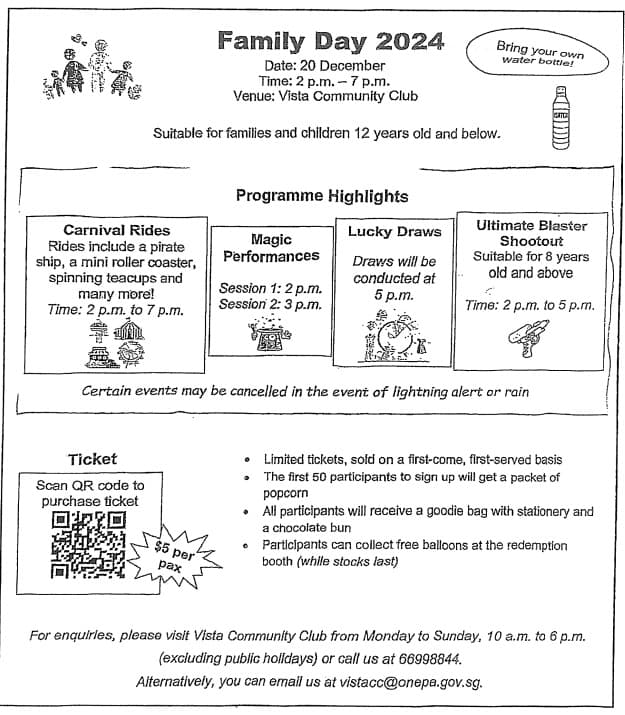
Writing taskTell us about something you learnt in school or online that helped you in real life.

Questions parents ask
What is synthesis and transformation?
A Paper 2 task where your child rewrites a sentence, or joins two into one, using the given words without changing the meaning. It tests grammar structures such as "neither ... nor", reported speech and the passive voice.
What is tested in PSLE listening comprehension?
Short recordings, each played twice, with questions answered while listening, many of them multiple choice with pictures to choose from. It tests picking out details and working out what a speaker means. Playwrite practises these along with note-taking, sequencing and route questions.
How does my child know what to practise next?
Every unit tracks your child’s accuracy, and each week’s challenges start from the weakest ones, so practice goes where marks are being lost.
Can my child practise on their own?
Yes. Most practice is marked the moment it is submitted and written answers within minutes, each with the reason behind the mark, so your child can practise and correct without waiting for an adult.