Turn short oral answers into full ones.
Record an answer to a real stimulus question and get comprehensive AI feedback based on the PSLE English oral rubrics.
Personal response
L4Your ideas have real reasons and examples, and most answers reach an ending.
Clarity of expression
L4A good range of words and varied sentences, with only a few slips.
- Marked on the PSLE oral rubrics
- Your school's oral papers welcome
- Works with a phone or laptop mic
Your child needs more oral practice than anyone has time to give.
Oral has no answer key, so someone has to listen to every answer and mark it. The practice stops with whoever has the time and expertise. With Playwrite, every answer your child records gets in-depth feedback instantly.
How it works
- Picture Stimulus
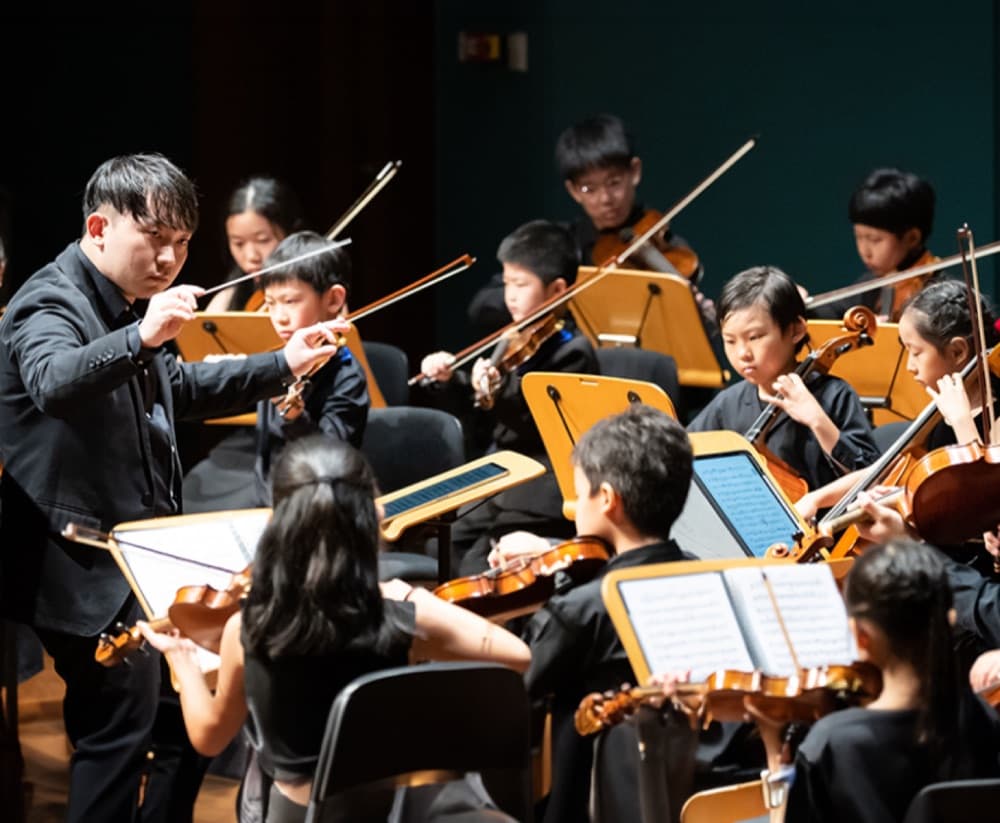
- Q1What do you think the people in the photograph are feeling or thinking?Observation
- Q2Have you watched a live performance before? Tell me about it.Experience
- Q3Have you taken part in a performance before? If not, would you like to?Opinion
01Pick a question or upload your own
Choose a picture stimulus with three questions from the bank, or take a photo of your child's oral paper.
- QuestionsQ2Have you watched a live performance before? Tell me about it.ExperienceNeed a boost?RecordTranscribing...
I had watched a live performance before. I remember a time when my friends and I got an opportunity to watch the National Day Rehearsal...
02Record each answer
Your child taps Record and answers out loud. A coach names the question type and offers sentence starters if they get stuck.
- Question 2
I had watched a live performance before. I remember a time when my friends and I got an opportunity to watch the National Day Rehearsal...
Try this approachAnswer directly, set the scene, describe the moment, share the lesson.Revised answerYes, I have watched a live performance before. Last year in July...03Read the feedback report
A mark on the PSLE rubrics, then for every answer: what worked, what to fix, and a revised answer to learn from.
See exactly how to improve.
Have you watched a live performance before? Tell me about it.
I had watched a live performance before.1 I remember a time when my friends and I got an opportunity to watch the National Day Rehearsal.2 We were very shocked to hear the news, but also glad that we had a chance to do so. When we reached the venue, we were stunned3 by the amount of people4 watching the show. We could not wait to watch the performance. During the performance, there were many exciting and entertaining shows such as the Red Lion dance performance and singing performance. We also got a chance to sing along with our National Day theme songs. After the performance, we did not feel like going home, but we had to do so. Even though we had to go home, we had a very enjoyable day.5
- Tense slip. "I have watched" for an experience up to now.
- A real experience, not just a yes. The rehearsal gives the story a clear focus.
- "Stunned" shows how surprised they felt.
- People can be counted: "the number of people".
- Ends on "enjoyable". Say what the day taught or changed.
Feedback
You described the performance vividly, especially when you said you were "stunned" by the crowd and sang along with the National Day theme songs. To improve, end with what the experience taught you, because depth stops after you say that you had an enjoyable day.
Revised answer
Yes, I have watched a live performance before. Last year in July, my friends and I got tickets to watch the National Day Rehearsal at the National Stadium. We were shocked but also very glad because we had never expected to get this opportunity.
When we reached the venue, we were stunned by the large crowd watching the show. We could not wait for the performance to begin. During the rehearsal, there were many exciting items, such as the Red Lions' performance and singing performances. My friends and I also sang along to the National Day theme songs, which made us feel included in the celebration.
After the performance, we did not feel like going home, but we had to. Even though the day ended, I still felt happy and proud. I learnt that watching a live performance is much more exciting when you can sing and celebrate together with a big crowd.
Personal response
L4Your ideas have real reasons and examples, and most answers reach an ending.
Relevant details and clear endings. The second answer stops at "enjoyable"; add what the experience taught you.
Clarity of expression
L4A good range of words and varied sentences, with only a few slips.
Linking words organise the ideas. One tense slip and "the amount of people" to fix.
Built for repetition, not a one-off attempt.
Large question bank
Exam-style picture stimuli, each with three spoken questions, so there is always a fresh one to practise on.
Your own questions
Snap a photo of any oral question paper and practise on that exact question instead.
Revised answers
Every answer comes back rewritten with ideas added, showing your child how to expand a short answer into a full one.
One membership for all of PSLE English.
Oral conversation is only one part of the Playwrite membership. The 7-day trial opens every component: 12,000+ questions across all four papers, in MOE exam format and marked on exam rubrics.
- Paper 1
- Composition
- Situational Writing
- Paper 2
- Grammar
- Vocabulary
- Cloze
- Editing
- Synthesis & Transformation
- Comprehension
- Paper 3
- Listening Comprehension
- Paper 4
- Reading Aloud
- Stimulus-based Conversation
Questions parents ask
What is the PSLE stimulus-based conversation?
Stimulus-Based Conversation is the larger part of the PSLE oral (Paper 4), worth 25 marks. Your child studies a picture, such as a poster or a photograph, during the preparation time, then talks it through with the examiners. The discussion starts from the picture and moves outward:
- The picture: what it shows and what your child thinks of it, using details they can see.
- Personal experience: a time your child did or saw something related.
- A wider issue: a view on a question for schools, families or society, backed by reasons.
It is marked on personal response (10 marks: relevant ideas, backed by reasons and examples and developed in depth), clarity of expression (10 marks: vocabulary, sentence variety and accuracy) and engagement in conversation (5 marks: how well your child keeps the discussion going).
What makes a good stimulus-based conversation answer?
A strong answer is a short, well-shaped piece of thinking, and the shape can be taught. Answers in the top bands share the same moves:
- Take a clear stand, then explain it. Open with a direct answer, and give reasons that explain why rather than restate the point. Naming two points first (“for safety and for health”) and then unpacking each keeps a long answer organised.
- Use the picture. Point to details the examiner can see, and use careful words such as “seems” or “probably” when guessing what is happening.
- Tell experiences as small stories. Set the scene (when, where, who), describe the moment something happened, say how it felt, and close on what your child learnt. A pleasant recount where nothing happens scores lower than a story with a turn in it.
- Take one reason further. Instead of listing three thin reasons, develop one: spell out a consequence, imagine what would happen if, or add an example that proves it. Depth throughout is what the top band asks for.
- Round off. End on a sentence that links back to the question, so the answer does not just stop.
These moves are learnt by rehearsing them aloud, not by memorising scripts. Playwrite lets your child practise as often as needed: a coach names the question type and offers sentence starters while recording, and the report shows what worked and what to fix in every answer, with a revised answer that builds on your child's own ideas.